


FREE MEDICARE INFORMATION GUIDE
Everything You Need to Know About
Medicare — Before You Enroll
Timelines, deadlines, coverage options, official contacts, and a step-by-step roadmap — all in one place.
👋 If you know someone turning 65, this is the most important thing you can share with them right now.
65M+
Americans on Medicare
4 Parts
A, B, C & D explained
7 Months
Initial Enrollment Window
Free
Advisor consultation
Medicare: Your Complete Guide for AEP and 2027
Medicare is federal health insurance for people 65 and older. Understanding its parts, costs, and enrollment windows is critical — missing a deadline can result in permanent penalties.
$202.90/mo
Part B Premium
2026 standard
$283/yr
Part B Deductible
2026 annual
$1,736
Part A Deductible
Per benefit period
$2,400
Part D OOP Cap
2027 max out-of-pocket
Part A - Hospital Insurance (Most people pay $0 premium)
Part A covers inpatient hospital stays, skilled nursing facility care, hospice care, and some home health care. Most people don't pay a premium for Part A if they (or their spouse) worked and paid Medicare taxes for at least 10 years (40 quarters).
Inpatient deductible (per benefit period) — $1,736 (2026)
Hospital days 1–60 — $0 coinsurance
Hospital days 61–90 — $434/day (2026)
Skilled nursing facility days 21–100 — $217/day (2026)
Part B - Medical Insurance ($202.90/month standard premium in 2026)
Part B covers doctor visits, outpatient care, preventive services, durable medical equipment, and some home health care. The standard premium in 2026 is $202.90/month (up from $185 in 2025). Higher-income beneficiaries pay more through IRMAA surcharges.
Standard monthly premium — $202.90 (2026)
Annual deductible — $283 (2026)
Coinsurance after deductible — 20% of approved amount
Important: Part B has no out-of-pocket maximum on its own. A Medigap supplement or Medicare Advantage plan can cap your costs.
Part C - Medicare Advantage (All-in-one Alternative)
Medicare Advantage (Part C) plans are offered by private insurance companies approved by Medicare. They must cover everything Original Medicare covers, and most include prescription drug coverage (Part D) and extra benefits like dental, vision, and hearing.
Original Medicare
• Pay monthly Part B premium
• No out-of-pocket cap
• Needs separate drug plan
• No dental/vision
• Full provider freedom
Medicare Advantage
• Often $0 additional premium
• Has out-of-pocket limit
• Drugs usually included
• Dental/vision included
• Network restrictions
Part D - Prescription Drug Coverage (2027: $2,400 OOP Cap)
Part D plans cover prescription drugs. In 2027, the maximum deductible is $700 and the annual out-of-pocket cap for covered Part D drugs is $2,400. After you reach the cap, you pay $0 for covered Part D drugs for the rest of the calendar year.
2027 out-of-pocket cap: $2,400
Maximum deductible: $700
Late-enrollment penalty: 1% of the national base beneficiary premium for each full month you went without Part D or other creditable drug coverage.
Tip: If you do not have other creditable drug coverage, enrolling when first eligible can help you avoid a late-enrollment penalty.
Medigap / Medicare Supplement Insurance
Medigap policies are sold by private insurers to help cover some costs Original Medicare does not pay, such as certain deductibles, coinsurance, and copayments. Benefits vary by standardized plan. Plan G is a commonly chosen option for people newly eligible for Medicare, but it does not cover the Part B deductible. Plan F is generally unavailable to people who became eligible for Medicare on or after January 1, 2020.
✔ Helps cover certain Original Medicare cost sharing, depending on the plan
✔ No network restrictions when a provider accepts Medicare
✔ Can make costs more predictable
⚠ Does not include prescription drug coverage; a separate Part D plan may be needed
⚠ Medical underwriting may apply outside a guaranteed-issue or open-enrollment right
Medicare Supplement Plan Comparison
Medigap policies can help pay certain out-of-pocket costs in Original Medicare, such as coinsurance, copayments and, depending on the plan, certain deductibles.
Critical Enrollment Periods
Initial Enrollment Period (IEP)
Your 7-month window begins 3 months before the month you turn 65 and ends 3 months after. Missing it may cause a coverage gap or late-enrollment penalties unless you qualify for another enrollment period.
Annual Enrollment Period (AEP)
October 15 through December 7 each year. You can join, switch, or drop Medicare Advantage and Part D plans. Changes generally take effect January 1.
Special Enrollment Period (SEP)
If you or your spouse are still employed and covered by a qualifying large employer group health plan (20+ employees), you may be eligible to delay Medicare without penalty. But you must verify this — not all employer plans qualify. COBRA and retiree coverage do NOT count
General Enrollment Period (GEP)
January 1 through March 31 each year for people who missed Part A or Part B enrollment. Coverage starts the first day of the month after you enroll. Late-enrollment penalties may apply.
IEP Enrollment Calculator
Enter your birth month and year to see your exact 7-month Initial Enrollment Period window.

Know someone turning 65 soon?
Most people don't learn about these enrollment windows until it's too late — and the penalties are permanent. Take 10 seconds to pass this on.
Watch & Learn
Medicare Explainer Video Library
Short, clear videos from official and trusted sources — covering every Medicare topic. Filter by subject and watch at your own pace.
All Videos

MEDICARE BASICS
Medicare 101: Understanding the Parts of Medicare
MEDICARE BASICS
Original Medicare Explained. Understanding Parts A and B

ENROLLMENT
Your Two Medicare Coverage Paths.
ENROLLMENT
Medicare Enrollment Periods Explained.
ENROLLMENT

Your Medicare Decision Checklist.
Want even more Medicare education videos?
Medicare Enrollment Timeline
Missing a Medicare deadline can mean permanent premium penalties. Here's every key window you need to know, in the order they happen.
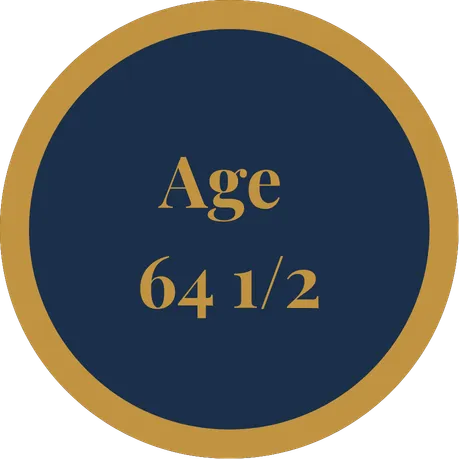
Six Months Before Your 65th Birthday — Start Preparing
Begin researching plan options in your area. Compare Medicare Advantage vs. Original Medicare + Supplement. Review your current employer/retiree coverage to understand how it coordinates. Contact Social Security to confirm your enrollment status if already receiving SS benefits — you may be enrolled automatically.

Initial Enrollment Period (IEP) — Your Most Important Window
A 7-month window: 3 months before the month you turn 65, your birthday month, and 3 months after. Enroll during the 3 months before your birthday month for the smoothest start. If you enroll during your birthday month or later, coverage generally starts the following month.
Missing this window may = permanent late penalties
Missing this window = permanent late penalties

Special Enrollment Period (SEP) — If You Have Employer Coverage
If you or your spouse are still working and have employer group health coverage, you qualify for an 8-month SEP after employment or coverage ends (whichever comes first). This lets you delay Part B without penalty. Important: COBRA and retiree insurance do NOT qualify you for a SEP.

Annual Enrollment Period (AEP) — October 15 to December 7
Anyone on Medicare can switch, join, or drop Medicare Advantage and Part D plans each year. Changes take effect January 1. This is your annual chance to review your plan for formulary changes, premium increases, or new benefits. Review every year — plans change!

Medicare Advantage Open Enrollment — January 1 to March 31
If you're enrolled in a Medicare Advantage plan, you can switch to a different MA plan or return to Original Medicare (and then enroll in a standalone Part D plan). You can only make one change during this period.

5-Star Special Enrollment Period: December 8 to November 30
If a 5-star Medicare Advantage, Cost, or Part D plan is available in your area, you may use this special enrollment period once between December 8 and November 30. Coverage begins the first day of the month after the plan receives your request.

If you know someone turning 65, send them this page right now.
The late enrollment penalty for Part B is permanent — 10% added to their premium for every year they wait. Don't let them find out the hard way.
Official Resources & Contact Numbers
These are the official government agencies and resources you'll need to enroll, ask questions, compare plans, and get assistance. Save these numbers.
Social Security Administration
1-800-772-1213
Enroll in Medicare Parts A & B here. If you're already receiving Social Security benefits at 65, you may be enrolled automatically. TTY: 1-800-325-0778
Medicare.gov (CMS)
1-800-633-4227
Compare plans, find providers, check coverage, and get help with Medicare questions 24/7. TTY: 1-877-486-2048. Use the Plan Finder tool to compare Part D and Advantage plans.
SHIP — Free Local Counseling
1-877-839-2675
State Health Insurance Assistance Program offers free, unbiased counseling from trained volunteers. No sales pitch — just expert guidance on your Medicare options.
Extra Help / Part D Assistance
1-800-772-1213
Apply for the Low-Income Subsidy (LIS/Extra Help) through Social Security. This can save you thousands per year on prescription drug costs.
Eldercare Locator
1-800-677-1116
Connects older adults and caregivers to local services including benefits enrollment assistance, transportation, legal services, and more. Mon–Fri 9am–8pm ET.
Stacy Gregory
1-804-539-6397
Get personalized help comparing Medicare options, enrollment timing, and costs from a licensed Medicare advisor. Your consultation is free and there is no obligation.
How to Start Your Medicare Enrollment — In Order

Check your automatic enrollment status
If you're already receiving Social Security or Railroad Retirement Board benefits, you're automatically enrolled in Parts A & B at 65. You should receive your red, white, and blue Medicare card about 3 months before your birthday. Visit SSA.gov to confirm.

Decide: Original Medicare or Medicare Advantage?
Original Medicare (Parts A + B) gives maximum flexibility with any Medicare-accepting provider. Medicare Advantage bundles everything through a private insurer with lower out-of-pocket costs but a more limited network. This is one of the most consequential decisions you'll make — a licensed advisor can help you compare options in your specific zip code.

Enroll in Parts A & B through Social Security
Apply online at SSA.gov/medicare/sign-up, call 1-800-772-1213, or visit your local Social Security office. You'll need your Social Security number, birth certificate or proof of age, and proof of citizenship or legal residency.

Choose a Part D prescription drug plan (or Medicare Advantage with drug coverage)
Even if you take no medications now, enroll in a Part D plan to avoid the late enrollment penalty. Use the Medicare Plan Finder at Medicare.gov to enter your specific medications and find the most cost-effective plan.

Consider a Medigap Supplement policy (if choosing Original Medicare)
Your best window is the 6 months starting when you turn 65 and are enrolled in Part B — insurers MUST offer you any plan at the best available price with no medical underwriting. Plan G is the most popular for new enrollees. Contact a licensed insurance broker to compare carriers in your area.

Set up your MyMedicare.gov account & review annually
Create an account at MyMedicare.gov to track claims, view coverage, and manage your plan. Every fall during AEP (Oct 15 – Dec 7), review your plan for changes to premiums, formularies, and networks — then switch if you can do better.
Not Receiving Social Security Yet?
You Are NOT Automatically Enrolled in Medicare.
Millions of Americans miss this. If you haven't started Social Security benefits, the government will NOT sign you up for Medicare automatically — even when you turn 65. You must take action yourself or risk lifetime penalties.

This is the #1 most common and costly Medicare mistake.
Delaying enrollment when you're not auto-enrolled can result in a permanent 10% Part B penalty for every 12 months you delay — plus potential gaps in coverage. This penalty stays with you for life.
Still Working at 65
If you or your spouse are still employed and covered by a qualifying large employer group health plan (20+ employees), you may be eligible to delay Medicare without penalty. But you must verify this — not all employer plans qualify. COBRA and retiree coverage do NOT count
Retired But Delaying Social Security
Many people delay Social Security to maximize their benefit (waiting until 70), but this means Medicare does NOT auto-enroll you. You must proactively sign up for Medicare Part A and Part B during your Initial Enrollment Period — the 7-month window around your 65th birthday.
Self-Employed or Business Owner
Self-employed individuals often have their own health insurance and haven't started Social Security. You are not enrolled automatically. You need to proactively contact Social Security and apply for Medicare during your enrollment window — even if you plan to keep your business coverage temporarily.
Covered By a Spouse's Employer Plan
If you're covered under your spouse's employer group plan, you may qualify for a Special Enrollment Period when that coverage ends. However, when your spouse retires or loses coverage, you have only 8 months to enroll in Medicare before late penalties apply permanently.
What To Do If You're NOT on Social Security — In Order
Follow these steps carefully. Missing a step or a deadline can cost you money permanently.
Mark your 65th birthday on the calendar — RIGHT NOW
Your Initial Enrollment Period (IEP) opens 3 months before the month you turn 65. For the smoothest start date, enroll during the 3 months before your birthday month. If you enroll during your birthday month or later, coverage generally starts the first day of the following month.
Confirm whether your current coverage qualifies for a delay
Only active employer group health coverage from an employer with 20+ employees qualifies you to delay Medicare without penalty. Call your HR department and ask: "Is our group health plan primary to Medicare for employees aged 65+?" Get the answer in writing if possible. COBRA, marketplace, retiree, and individual plans do NOT qualify.

Apply online at SSA.gov — do NOT wait for the mail
Go to ssa.gov/medicare/sign-up and apply for Part A and/or Part B. You can apply up to 3 months before your 65th birthday. You do NOT have to apply for Social Security income at the same time — you can apply for Medicare only. Alternatively, call SSA at 1-800-772-1213 or visit your local Social Security office.
Set up your Medicare premium payment — it won't come out of SS automatically
Since you're not receiving Social Security benefits, Medicare will NOT automatically deduct your Part B premium from a Social Security check. You'll receive a quarterly bill from Medicare. You can set up automatic bank payments through your MyMedicare.gov account or pay by check. Failing to pay your premium can result in loss of coverage.

What you'll need to apply
Have the following ready: your Social Security number, date and place of birth, proof of U.S. citizenship or legal residency, current health insurance information (if you have other coverage), and your employer's name and address if you're still working. If you're applying during a Special Enrollment Period (leaving employer coverage), you'll also need CMS Form L564 completed by your employer confirming your group coverage dates.
Work with a licensed Medicare advisor — this is where mistakes happen
The rules for non-Social Security enrollees are more complex — especially around SEP qualification, employer size rules, and premium billing. A licensed Medicare advisor can walk through your specific situation at no cost. This is exactly the kind of situation where one conversation can save you thousands of dollars in lifetime penalties.
Quick Fact — You Can Have Medicare Without Social Security
Applying for Medicare does NOT mean you have to start collecting Social Security income. These are two completely separate programs. You can — and often should — enroll in Medicare at 65 while choosing to delay Social Security until age 70 to maximize your monthly benefit. Don't let confusion between the two programs cause you to miss your Medicare window.
Medicare Readiness Checklist
Click each item as you complete it. Use this as your personal Medicare to-do list.
Have Questions? Get a Free Consultation
Medicare decisions are personal. Get 1-on-1 guidance from a licensed advisor who can review your specific situation at no cost — and no obligation.
The Best Gift You Can Give Someone Turning 65 — Or Anyone With Medicare Questions Is This Information
Most people don't learn about Medicare enrollment windows, late penalties, or the Social Security trap until after they've already paid for the mistake. One share could save a family member thousands of dollars — permanently.
Stacy Gregory | Licensed Life & Medicare Advisor
Stacy Gregory Insurance | VA, NC, MD, PA, OH, NJ Licensed
© Copyright 2026 Stacy Gregory Insurance. All Rights Reserved.
This guide is for informational purposes only and does not constitute legal or financial advice. Medicare information is current as of 2027 and is subject to change. We are not affiliated with or endorsed by Medicare, Medicaid, the Social Security Administration, or any government agency. Always verify current costs and coverage details at Medicare.gov.